

For most enterprises, governance and compliance don’t fail because they don’t have rules and processes in place. They fail because the organisation relies on people to apply them correctly, consistently, across every team, every audience, and every journey. The problem is, these processes rarely scale through training, but rather when enforced through infrastructure.
At Zeotap, we’ve been building that infrastructure since day one. Building out of Europe meant data privacy was never just a regulation to adapt to. It had to be part of the architecture. And it’s this approach that has put us at the forefront of enterprise data governance in the CDP market today.
In this blog, we’ll cover:
- Why access control is a compliance decision, not just an operational one
- Why governance breaks at enterprise scale, and why training isn’t the fix
- How system-level enforcement removes the compliance burden from individual teams
Enforcing Governance at the System Level
The most reliable mechanism for enterprise-scale compliance is removing the dependency on individuals to apply it.
In practice, however, this is what governance still looks like: A consent template that needs to be applied to dozens of audiences. Suppression logic that gets re-checked before every campaign. Eligibility rules that live in a shared doc somewhere, relying on whoever built the audience to have read it. At a small scale, that may work. But at enterprise scale, these processes typically break quietly, and are often only discovered after the fact.
And the fix isn’t better training or tighter processes. It’s shifting governance from a human responsibility to a process the platform guarantees. Admins define the logic once: consent requirements, suppression criteria, and eligibility rules. It then propagates automatically across every audience and every journey.
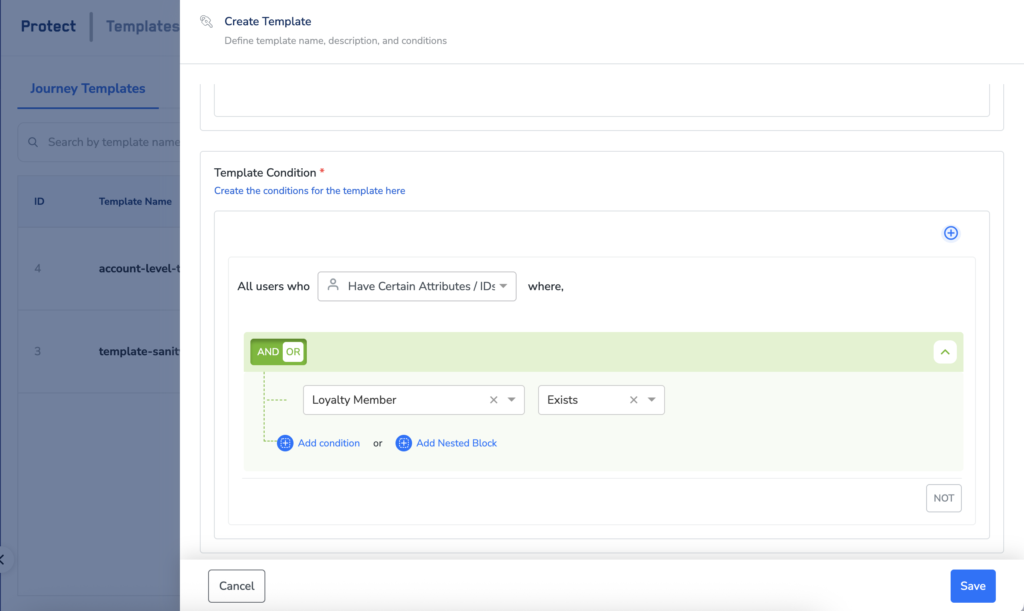
With this setup, your teams work freely and at pace, without carrying the compliance burden individually. There’s no checklist to remember, no template to manually apply. The standard is set at the top and the governed workspace they’re operating in has already taken care of it.
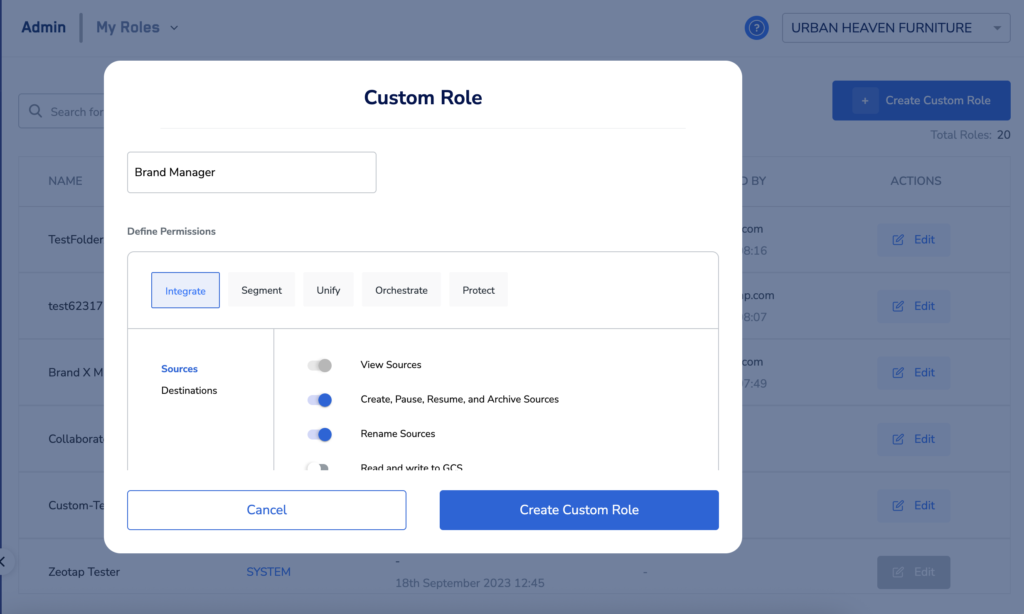
The practical implications vary by industry, but the principle is consistent:
- In financial services, where GDPR and CCPA consent requirements are strict and tiered, a single change to the governance template updates every audience it governs.
- In retail, where consent requirements differ by channel (email, paid media, in-app), each use-case environment carries its own consent logic automatically, so the team building the email audience doesn’t need to remember what the paid media team’s rules are.
- In telco and media, where suppression logic is complex and often re-applied manually, that logic is templated once and inherited everywhere, meaning a customer who opted out stays suppressed.
- In marketplaces, where buyer and seller audiences carry different consent requirements and a large proportion of users are anonymous, governance has to work at the identity level; not just the profile level. Consent segmentation needs to apply correctly regardless of whether a user is known or pseudonymous.
The downstream effect on marketing is significant. Teams that aren’t second-guessing consent rules move faster. Campaigns that inherit suppression logic automatically produce fewer errors, and fewer errors mean fewer instances of contacting customers who shouldn’t have been contacted. In regulated markets, that’s not just a trust issue. A single mis-targeted campaign can trigger regulatory scrutiny, and under GDPR, the consequences range from formal investigation to fines that reach into the tens of millions. When your governance foundation is solid, that risk disappears from the equation entirely, and personalisation at scale becomes something you can execute confidently, not cautiously.
Access Control is a Compliance Decision
Running a CDP across multiple teams sounds straightforward until you’re actually doing it. A retail media team, a CRM team, and a brand team can all operate on the same platform, but they rarely share the same consent requirements, the same suppression rules, or the same data access needs. Without the right structure in place, the boundaries between them only exist on paper.
The only practical answer is giving each team its own governed workspace: its own audiences, its own journeys, its own rules. What they can see, build, and activate is defined by their workstream. Visibility and access are scoped to what’s relevant to them, which means less friction, less risk of interference, and cleaner operations across the board.
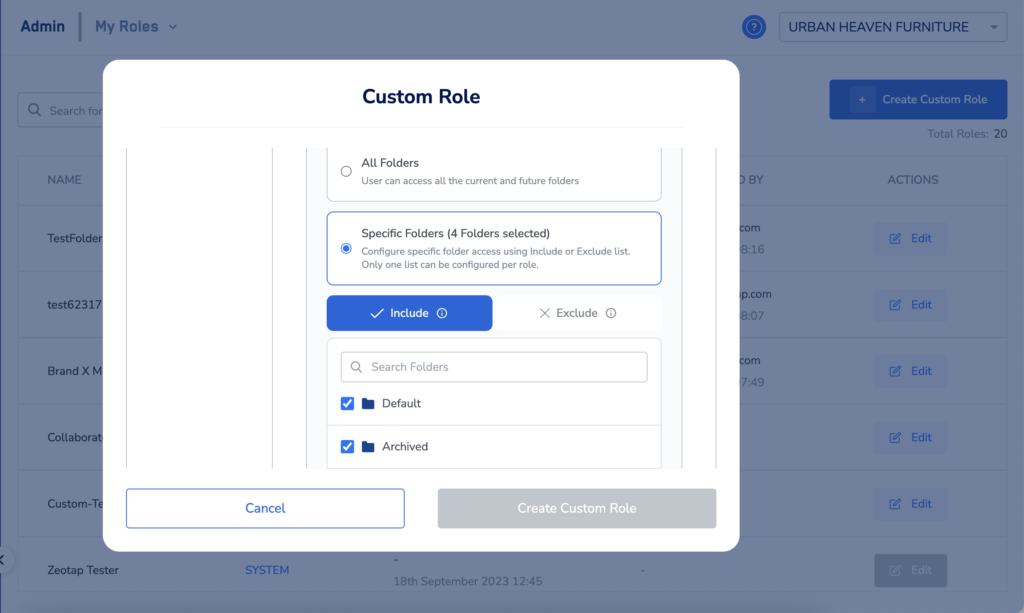
This matters for compliance as much as it does for day-to-day operations. Different teams frequently work under different consent requirements. A retail media team running paid media campaigns has different consent obligations than a CRM team running email journeys. When access and governance are tied together at the environment level, the right rules apply to the right workstream automatically with no crossovers.
For enterprises running multiple regions or brands on a single CDP instance, the same principle applies. Each market operates under its own consent framework, within a shared platform, without one region’s rules bleeding into another’s.
- In retail, the challenge isn’t just building separate workflows for teams. The goal is to keep teams independent without fragmenting the data they all need, so that brand, CRM, and retail media can each operate within their own environment while drawing from the same underlying customer profiles.
- In media, editorial and commercial audience workflows need to remain distinct. This often comes as a regulatory requirement, not just an operational preference. The platform maintains that boundary without anyone having to enforce it manually.
- For multi-region enterprises, the value goes further still. A retailer operating across Germany, the UK, and France carries different consent obligations per market. Market-specific consent logic means each operates within its own governed workspace. A regulatory change in one country updates only that market’s framework, and never touches another.
Conclusion
Governance stops being a problem to manage the moment it stops being a human responsibility. When it’s built into the platform, it stops being a constraint and becomes a foundation. For organisations operating across teams, markets, and channels, that foundation is what compliance at scale actually requires.
And it’s with that understanding we’ve been building at Zeotap since day one.
Chat with one of our experts and see how Zeotap can help better enforce governance across your entire organisation.